Microsoft’s New AI Push Targets Enterprise Deployment Costs

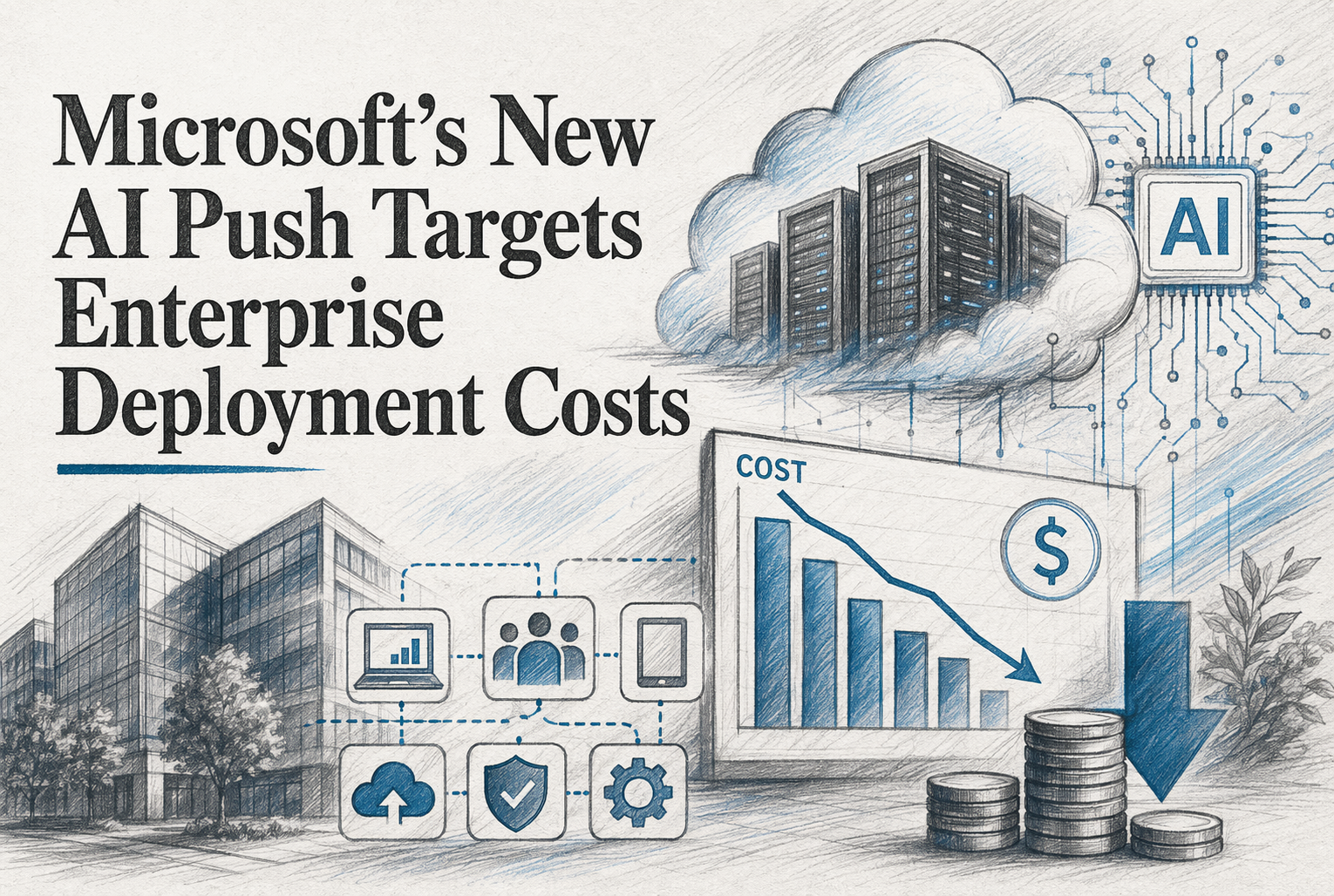
Quick Summary: Microsoft is launching a new unit with 6,000 experts and a $2.5 billion investment to embed AI deployment teams directly into customer workflows. This aims to reduce costs, cut wasted pilots, and speed up moving AI projects from testing to production. The move reflects a shift from model buying to real-world AI deployment, emphasizing faster results and better ROI for large enterprises.
Microsoft said on July 2, 2026 that Microsoft Frontier Company will put $2.5 billion and 6,000 specialists behind customers already using its stack, with early work at London Stock Exchange Group, Unilever, Land O’Lakes, and Accenture. That matters because AI Deployment Costs, Enterprise AI Implementation, and weak ROI now block scale. This story looks at how Microsoft’s new unit may cut AI Deployment Costs, shape smarter AI Investment Strategies, and reduce AI Deployment Costs by tying work to business outcomes.
What Microsoft Actually Announced
Microsoft did not launch a new model. It launched Microsoft Frontier Company, a new operating business built to help customers get AI into real workflows faster.
The 6,000-person operating model
The headline is simple: Microsoft says it will put 6,000 industry and engineering experts closer to customers, backed by a $2.5 billion investment, to co-design, deploy, and improve AI systems tied to business results, according to CNBC’s report on the launch.
| Element | What Microsoft said | Why it matters |
|---|---|---|
| Team size | 6,000 people | More hands-on delivery capacity |
| Investment | $2.5 billion | Big budget behind adoption |
| Model | Embedded experts | Less pilot drift |
Why Microsoft says this is different
Microsoft’s pitch is that this goes beyond standard forward-deployed engineering. The company says the unit will be outcome-driven, with its own leadership and financial accountability, while keeping customer data and IP protected inside an open, model-flexible setup, as outlined in Microsoft’s own follow-up note.
- Not just advisory work
- Not just one AI model
- Not just another pilot factory
The real message for CIOs: Microsoft is selling lower deployment friction, not just more AI.
Also Read: Top Business Tools to Boost Your Company’s Efficiency in 2026
How Microsoft Says It Will Cut Deployment Waste
Microsoft’s pitch is simple: stop treating AI like a string of demos and start embedding delivery teams inside the business. Its new Frontier Company will place 6,000 industry and engineering experts with customers, backed by a $2.5 billion investment, to help move projects from pilot to production, according to CNBC’s reporting on the launch.
- Embedded experts instead of one-off pilots
- Model choice and governance as cost controls
Teams are meant to stay involved past kickoff. Microsoft says its forward deployed engineers work side by side with customer teams from use case design through rollout and ongoing adoption, which is meant to cut the common waste of stalled pilots, rework, and handoff gaps, based on Microsoft’s execution-focused blog post.

| Cost leak Microsoft targets | Claimed fix |
|---|---|
| Pilot projects that never scale | Keep Microsoft engineers engaged through deployment |
| Wrong model for the job | Let teams pick from multiple model options |
| Compliance delays | Build governance, security, and controls in earlier |
The real message for CIOs: Microsoft is selling fewer isolated tools and more managed execution.
Also Read: Breaking News: New AI Tools Launching in 2026
Why the Timing Matters for Enterprise Buyers
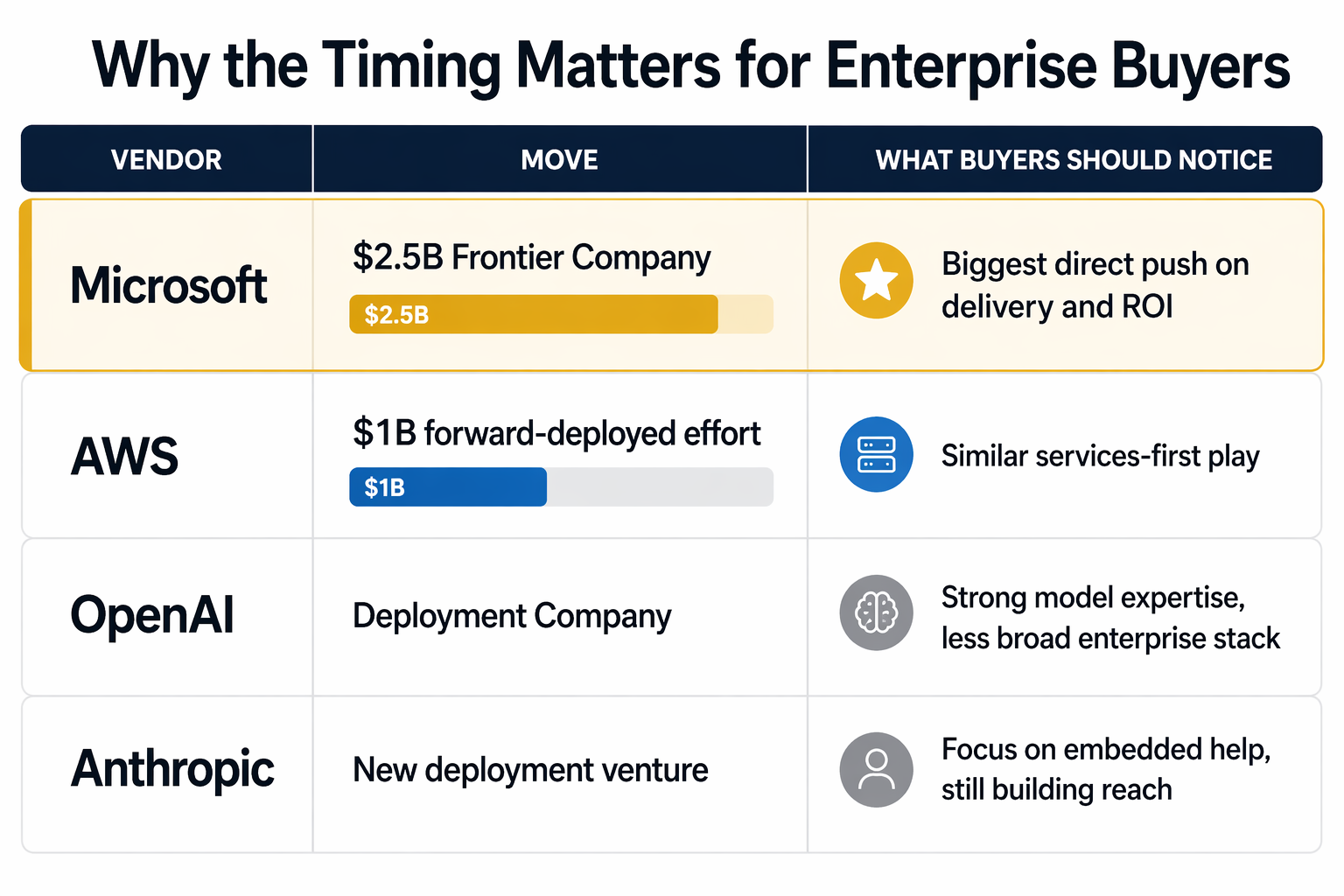
Microsoft moved now because the market shifted from buying models to buying working deployments. In early July 2026, Microsoft said Frontier Company would put 6,000 engineers and industry experts inside customer teams with a $2.5 billion backing, according to GeekWire’s report on the launch.
| Vendor | Move | What buyers should notice |
|---|---|---|
| Microsoft | $2.5B Frontier Company | Biggest direct push on delivery and ROI |
| AWS | $1B forward-deployed effort | Similar services-first play |
| OpenAI | Deployment Company | Strong model expertise, less broad enterprise stack |
| Anthropic | New deployment venture | Focus on embedded help, still building reach |
For buyers, the timing matters for three reasons:
- Competition helps pricing and terms.
- Model lock-in looks riskier now.
- Vendors know pilots are stalling, so they are selling hands-on delivery, not just access.
The key shift: ask who can cut staffing strain and move one use case into production fast.
Microsoft’s edge is breadth. It says customers can use models from OpenAI, Anthropic, Microsoft, or open-source options while keeping governance and ROI controls in place, as noted by Mobile World Live.

Cut research time and avoid costly dead-end pilots. Use OneListd to quickly find tools, ideas, and use cases worth testing next.
Frequently Asked Questions
Q1: How is Microsoft reducing enterprise deployment costs with its new AI initiatives?
Microsoft is cutting cost by bundling models, cloud, security, and workflow tools into one stack. That lowers vendor sprawl, speeds rollout, reduces custom build work, and limits wasted pilot spending.
Q2: What are the benefits of Microsoft's AI push for large organizations?
Large firms can move faster with less hiring pressure. They get tighter governance, easier scaling, better fit with Microsoft software already in use, and clearer paths from pilot to real business value.
Q3: How does Microsoft’s AI deployment approach compare to competitors like Amazon and OpenAI?
Microsoft leans on enterprise integration and support. Amazon often wins on cloud flexibility. OpenAI leads in model mindshare. Microsoft’s edge is lowering setup friction inside existing corporate IT, security, and productivity environments.
Conclusion
Microsoft’s push is clear: cut AI rollout friction, not just sell models. Its $2.5 billion Frontier Company and 6,000 embedded specialists target failed pilots, while Microsoft’s own Copilot cost rules show why tighter deployment control now matters.