Breaking News: New AI Tools Launching in 2026


Quick Summary: AI tools in 2026 are transforming entertainment by making discovery faster and more personalized, especially for younger audiences. People now prefer chatbots over scrolling for media choices, but trust remains an issue due to inaccuracies. New AI features are adding social and verified data elements to improve recommendations and engagement worldwide.
AI Tools 2026 are already changing how people find movies, shows, games, and creator content. Nielsen says 49% of Gen Alpha now choose AI chatbots first for TV and movie picks, while Reuters Institute shows answer engines are reshaping media access. That makes AI Tools 2026 hard to ignore. This Artificial Intelligence Launch wave and New AI Software boom bring speed, but also trust gaps. We track AI Tools 2026 closely, with a clear focus on what helps, what spreads fast, and what still needs checking.
AI Discovery Tools Are Becoming the New Front Door for Entertainment
What the 2026 numbers show
AI is moving from side feature to starting point. Nielsen's 2026 Gracenote study says 66% of people increased chatbot use in the past 12 to 18 months. Among Gen Alpha, that jumps to 80%, and 49% now pick AI chatbots as the best source for TV and movie picks. Reuters also found 10% of people already use AI chatbots for news, with higher use among under-35s, according to the 2026 Digital News Report.
Why audiences are adopting these tools so quickly
The shift is simple:
- people want faster answers
- catalogs keep getting bigger
- chat works better than endless scrolling
AI now acts like a shortcut between mood and media choice.
Users prefer chatbots for complex questions, follow-ups, and direct answers. That makes AI tools feel less like search bars and more like entertainment guides.
Also Read: AI Tools Transforming Workflow Productivity in 2026
Trust and Verification Are the Biggest Weak Point
Why people still double-check AI answers
People double-check because AI still sounds sure even when it is wrong. Nielsen’s 2026 Gracenote study found an ungrounded LLM fabricated all measured metadata for 506 of 2,600 movie and TV titles, or nearly one in five according to Nielsen. If a bot gets the cast, year, or plot wrong, users learn fast to verify before they trust.
Smooth answers do not equal verified answers.
The risk for entertainment platforms and creators
The trust hit lands on the platform, not just the model. Reuters Institute notes AI interfaces are pushing media brands to prove accuracy and distinct value in 2026 as answer engines grow. For entertainment tools, that means:
- bad recommendations
- wrong credits
- fake summaries
Creators lose visibility, and users stop trusting the feed. That is why verified data is the real product.
Which New AI Tools Matter Most for Entertainment Fans in 2026
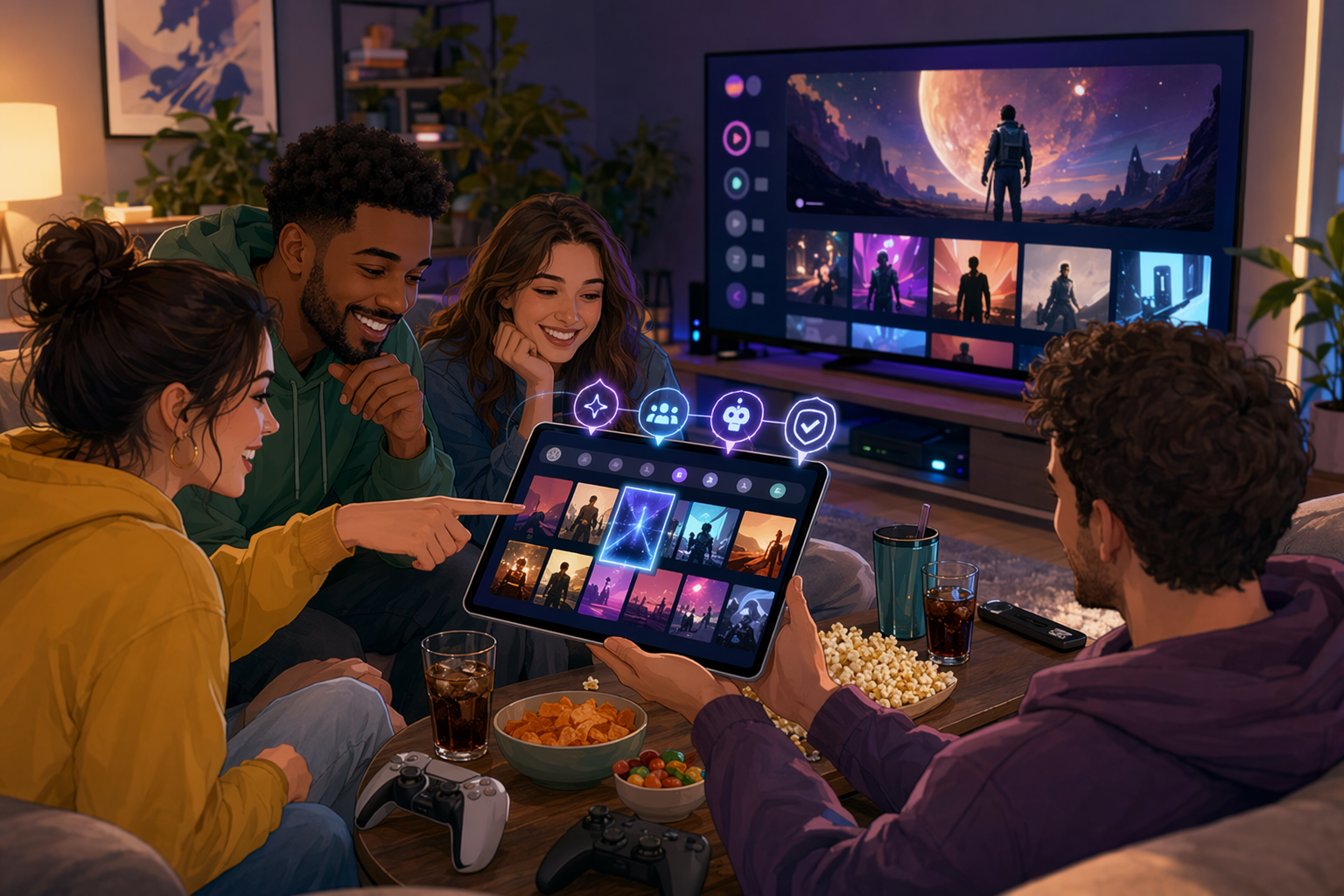
For movie and TV fans, the big shift is smarter discovery, not just more content. Plex now adds social discovery, public title chats, better lists, and a personal Match Score, while Gracenote’s new Video MCP Server helps platforms answer detailed watch queries with cleaner, verified metadata and availability info Plex’s 2026 update and Gracenote’s launch show where streaming search is going.
For games, music, and fandoms, look at tools that turn fans into participants:
- Meta’s Pocket lets users make and share tiny AI-made playable experiences.
- Eros Music Worlds turns film characters into AI-native music acts.
- Deloitte says many fans want one place that blends content, community, and experiences, which gives platforms like OneListd a real opening to organize the chaos Deloitte’s 2026 media trends.
Also Read: Top Business Tools to Boost Your Company’s Efficiency in 2026
What This Means for Global Audience Engagement
Who benefits first
Global audiences benefit fastest when AI cuts search time and understands local taste. JioHotstar says its new ChatGPT-powered discovery works across languages and viewing contexts, which matters in markets where users mix regional and global content multilingual content discovery. Netflix is pushing the same fix for content overload, with mood-based suggestions and voice search aimed at helping viewers press play faster AI tools for content overload.
- First winners: mobile-first users, multilingual viewers, casual fans, and families
- Big shift: less scrolling, more instant matches
- Platform upside: stronger retention and broader cross-border discovery
For platforms like OneListd, this raises the bar - recommendations must feel personal, fast, and culturally aware.
Want better picks from the 2026 AI tool wave? Try OneListd to find games, shows, hobbies, and tools that actually match your taste.
Frequently Asked Questions
Q1: What are the key AI tools launching in 2026 and how will they impact entertainment and hobbies globally?
Expect smarter recommendation apps, AI search, and personal agents. They will help people find games, anime, shows, and hobbies faster, with better taste matching and less scrolling.
Q2: How will the new AI developments in 2026 reshape content discovery, verification, and audience engagement worldwide?
AI will rank content by fit, flag fake clips faster, and tailor feeds to mood and intent. That means quicker picks, better trust signals, and more active fan communities.
Q3: What role will AI-driven chatbots and agents play in transforming news consumption and media industries in 2026?
They will act like personal editors. Users will ask for short recaps, source checks, and niche updates. Media brands will use them to keep audiences engaged without forcing endless browsing.
Conclusion
AI entertainment discovery in 2026 is getting faster, more personal, and more social. Nielsen shows demand is real, while new launches prove recommendation tools now shape how people find what to watch, play, and hear.