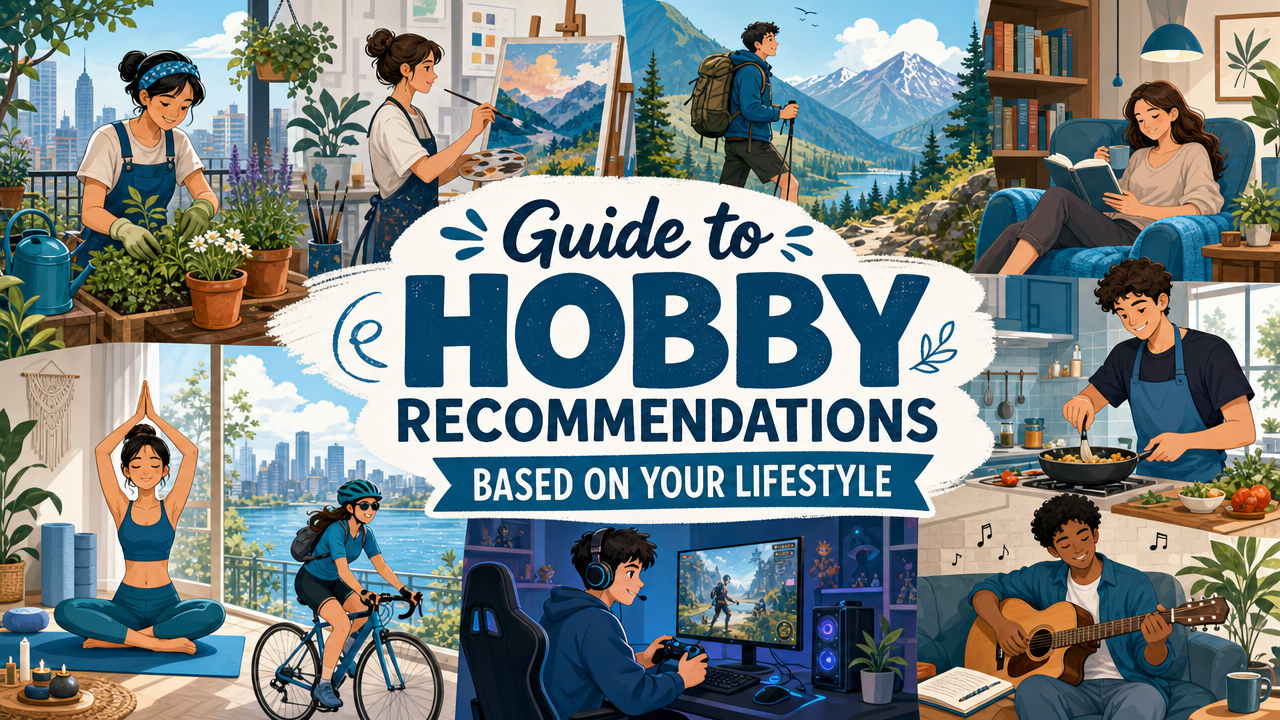
Guide to Hobby Recommendations Based on Your Lifestyle

Quick Summary: The key to sticking with hobbies is choosing ones that fit your actual lifestyle, not idealized plans. Use filters for time, energy, space, and budget to find realistic options. Start small and test a hobby for two weeks before committing, adjusting as needed. If you keep bookmarking anime crafts, co-op game nights, or cozy weekend plans but quit fast, the issue is usually fit, not effort. Most people pick from random Hobby Suggestions instead of matching hobbies to their time, energy, space, and social style. This guide fixes that. You’ll use a simple filter to find Hobby Suggestions that actually stick, spot the Best Hobbies for your real routine, and turn vague Lifestyle Activities into clear, realistic Hobby Suggestions.
Match the Hobby to Your Daily Reality
Pick a hobby that fits your real life, not your ideal life. Research shows leisure activities support mental and physical health, and regular activity matters more than trying everything at once 2026 research on leisure and health.
- Use four filters: time, energy, space, and budget
- Time - 10 minutes, 30 minutes, or 2 hours?
- Energy - after-work tired, medium focus, or fully on?
- Space - desk, living room, outdoors, or shared home?
- Budget - free, low-cost, or gear-heavy?
| Filter | Ask yourself | Good hobby fit |
|---|---|---|
| Time | How long can I do this most days? | Reading sprints, sketching, mini workouts |
| Energy | What do I have left after work? | Journaling, gaming, walking |
| Space | Where will I actually do it? | Yoga, model kits, photography |
| Budget | Can I keep this up monthly? | Drawing, hiking, language apps |

A hobby you can repeat beats a hobby that only sounds impressive.
- Separate weekday hobbies from weekend hobbies
Weekdays need low setup and easy stopping points. Weekends can handle longer, deeper hobbies. The CDC says physical activity can help you feel better and sleep better, even in smaller routines CDC physical activity benefits.
- Weekday hobbies: mobile games, reading, crochet, language practice, short walks
- Weekend hobbies: hiking, cosplay builds, baking, long gaming sessions, dance classes
Keep one “default” hobby for busy days and one “stretch” hobby for open days.
Choose the Right Type of Hobby for Your Personality
Match your hobby to how you get energy, not to what looks cool. Cleveland Clinic notes that introverts often recharge alone, while extroverts feel energized around people.
- If you recharge alone, choose low-pressure solo hobbies
Try reading, solo gaming, sketching, journaling, model building, or hiking. Keep the setup simple. A hobby should calm you, not feel like a performance. - If you gain energy from people, choose shared hobbies
Pick hobbies with built-in interaction, like board game nights, dance classes, co-op games, group fitness, or cosplay meetups. Shared hobbies work best when showing up feels easy and fun. - If you want progress, choose skill-based hobbies
Go for hobbies with clear levels, feedback, or milestones. Good picks include chess, drawing, guitar, coding, language learning, or baking. A PLOS One study also suggests chosen alone time feels better when it supports real personal value.
Pick one hobby that fits your energy now. You can always add a second type later.
Pick Hobbies That Improve How You Feel, Not Just How You Spend Time
Choose hobbies that change your mood after you do them. Reviews of leisure research link hobbies with better mental and physical health through psychological, social, and behavior pathways large leisure health review.
- Mental benefits: focus, calm, and confidence
- Pick hobbies that hold your attention, like drawing, model kits, reading, or puzzle games.
- Small wins build confidence fast.
- Calm hobbies help when your brain feels noisy.

- Physical and practical benefits: movement, structure, and routine
- Walking, dance, gardening, and casual sports help mood, sleep, and thinking.
- The CDC says physical activity can reduce short-term anxiety and help you feel better right away CDC physical activity benefits.
- The best hobby is one you will repeat next week.
Try One Hobby for Two Weeks Before You Commit
Use a small first-session test
Start tiny. Do one cheap, low-pressure session first. A habit review found simple actions stick faster than complex ones, so keep your first try easy. Borrow gear, set a 30-minute limit, and test one clear task:
- draw one page
- play one match
- knit one row
Do not buy full equipment yet.
Decide whether to keep, adjust, or drop it
After two weeks, judge the hobby by real life, not hype. The NIDDK behavior-change guide says new routines take time and often need adjustment. Ask:
- Did I want to come back?
- Was setup annoying?
- Did it fit my time and energy?
Keep it, tweak it, or drop it fast.
Still unsure what fits your time, energy, and space? Visit OneListd to find hobby picks matched to your real lifestyle.
Frequently Asked Questions
Q1: How can I find hobbies that match my lifestyle and personality?
Match hobbies to your time, energy, space, budget, and social style. Start with one small test, not five. If you like quiet focus, try solo hobbies. If you need momentum, pick active or group-based options.
Q2: What are the top productive hobbies for mental and physical health?
Good picks include walking, yoga, gardening, cooking, journaling, dancing, and strength training. They help mood, focus, and stress. Choose one that fits your week, or you will quit fast.
Q3: How do hobbies like gardening, cooking, or painting improve my life?
These hobbies build routine, patience, and skill. They also lower stress and give you visible progress. Cooking helps daily life, gardening gets you moving, and painting gives you a calm creative outlet.
Conclusion
The best hobby is the one that fits your real life. Match it to your time, energy, space, and social style. That works better than chasing variety alone, and active leisure is tied to better health, according to 2026 research.